The post Hillbilly with a Rosary appeared first on The Catholic Thing.
—
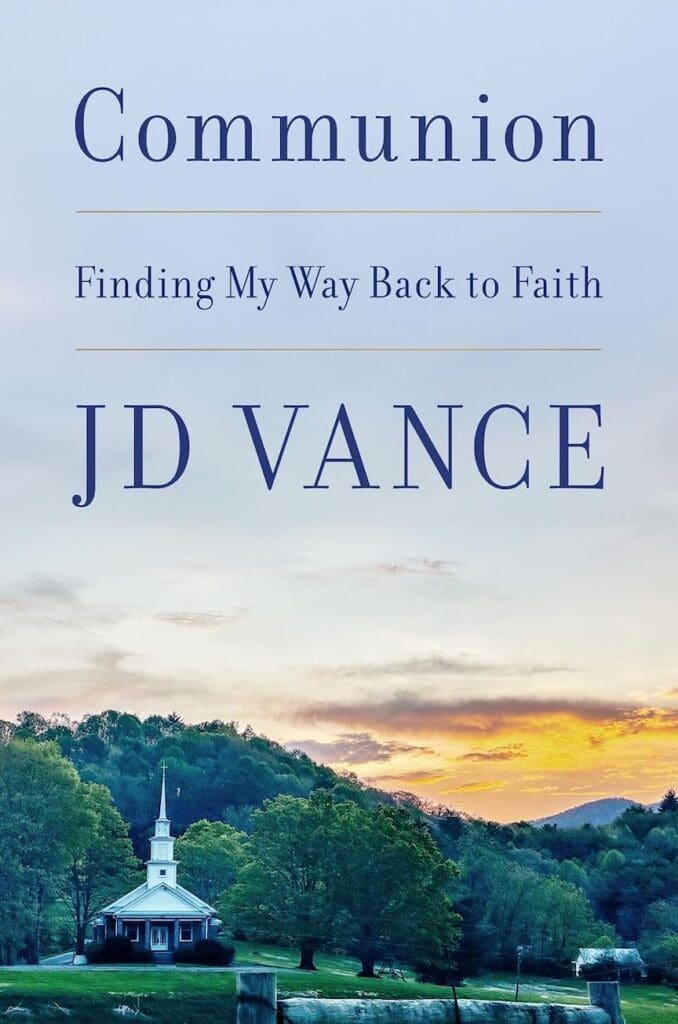
When J.D. Vance’s memoir of his path back to Christianity, Communion: Finding My Way Back to Faith, is described at a high level of generality, we see immediately that it is a book of the highest importance. Here is a leader on the world stage who grasps, and is not afraid to say, that Christianity has been the source of social unity for European – that is, Western – civilization, and also for that nation we call the United States, and even for neighborhoods and families.
The only two realities that unite us across disparities of wealth, race, and creed are the military and the Church, he likes to say. Economic bonds – trade agreements and business relationships – are insufficient. So too are procedural constructions of “international order” and human rights.
Rather, these systems risk dissolving subsidiary unities; and when they become “global,” they serve only to unite the elites of various countries, rendering them incapable even of understanding the concerns of common working men and women.
Now add that this perceptive world leader has embraced Catholicism as that realization of Christianity that he regards as best. I don’t think that commentators who anticipated a “Catholic moment” thought it could take this form.
Also working at a high level of generality, we can say that Vance converts to Catholicism because of a neglected transcendental. Some have seen Christianity as the source of Beauty (Kenneth Clark). Others, as the source of knowledge, science, and our grasp of Truth (Pierre Duhem). Still others, for its fostering of holiness, the virtues, and the Good (Tom Holland). But Vance correctly sees it as the glue that can make us, across our differences, in various ways One.
In this he is closely following Vatican II, which in Gaudium et spes taught that the Church, “thanks to her relationship with Christ, [is] a sacramental sign and an instrument of intimate union with God, and of the unity of the whole human race.” (n.42, quoting Lumen gentium n.1)
But this is at a high level of generality. The book is a memoir and begins, again, with Vance’s “hillbilly” roots in Appalachia, with tales of Mamaw and her crass bits of wisdom and guns. True, the book is interspersed with mini-policy papers on Catholic social teaching – immigration and other topics you’d expect from a potential presidential candidate – that are not always very accurate or well-grounded. But what keeps the book moving are anecdotes and tone of a tent-revival testimony.
Therefore, it must ultimately be evaluated for that testimony and, as a Catholic’s memoir, whether it witnesses well to Catholicism.
The man giving witness is appealing and good-hearted. He shows real self-knowledge about the pointlessness of his ambitions as a young man. He wants above all to be a good father. He puts being a good father above his career. He sees that being a good father means caring for the character of his children above all.
Although highly credentialed, he wants to stay united with ordinary workers, like his dad, who was a welder. He strives to consider himself no better than they are, to regard their work as having equal dignity with his own.
He has a generous love of the religious pluralism distinctive of America. In this, he is like a mainline Protestant from the 1950s. He’s a Catholic who loves Charlie Kirk, and who can also get along with progressive Christians in supporting the labor movement. He loves the generically Christian American civic religion of the 1950s.
But when I consider the book as the story of a Catholic convert, I find multiple shortcomings, and one very disturbing and scandalous chapter, which together make this a book that I cannot recommend to young persons or inquirers. This is a shame, because these shortcomings could easily have been repaired.
The scandalous chapter is entitled “My Favorite Year,” which describes how he and Usha shacked up in Cincinnati, bought two dogs, and lived like the secular elites Vance loves to criticize:
It was a very good year: a young couple, madly in love, planning a wedding with no kids and few responsibilities. We took road trips all over the region. We learned to cook. We discovered our favorite restaurant in downtown Cincinnati and went there all the time because we didn’t have anything else to do.
He’s implying that sex is better than marriage, sin better than chastity, dating better than one-flesh union, having dogs better than having children. He’s implicitly recommending young people put off getting married so that they too can enjoy their “favorite year.” Add to this that he wasn’t baptized yet, and so, too: being pagan can be better than being joined with Christ. St. Paul gave a different testimony: “I count these things as dung.” (Phil 3:8)
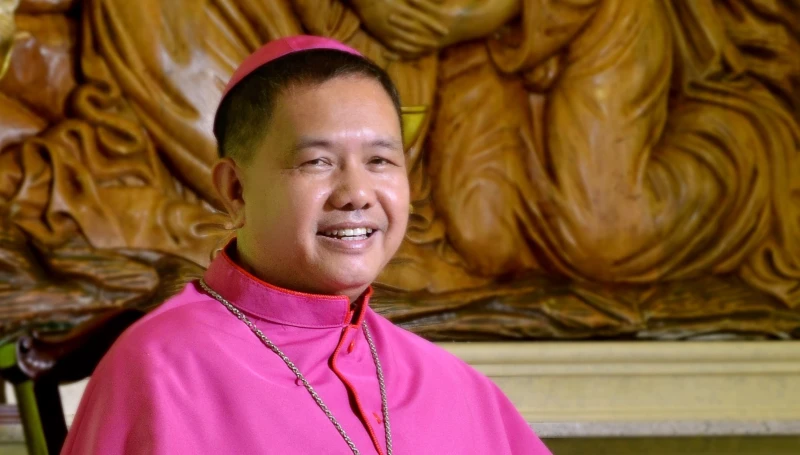
Vice President JD Vance [Official White House Portrait, March 25, 2026, by Emily J. Higgins (via Wikipedia)]
As I said, a repair is easy: imitate C.S. Lewis when he confessed that he did not like children, and say something like: “I understand that my attachment to that year is disordered; I pray for the grace to grieve over the evil of sin and my poverty in being separated from Christ.”
At one point, with unrecognized self-revelation, Vance quotes a priest who tells him, “you’re too emotionally invested in Usha.” I was wondering if that priest had in the back of his mind, “If anyone comes to me and does not hate his own. . .wife. . .he cannot be my disciple.” (Luke 14:26) There are no discussions in the book of the difficulties in marriages with “disparity of cult.”
Vance makes gross misstatements about the Real Presence. (173) He says he lives without caring whether Heaven and Hell exist. (252-3) He refers to the Good Friday liturgy in St. Peter’s as a “Mass.” (200-201) He denies that Christianity promises victory over physical death. (172) He says the Church itself is scattered and divided. (283)
These aren’t quibbles because a book that aims at communion cannot achieve it through errors about the very mysteries – the Eucharist, the Church’s unity, the Last Things – that constitute communion.
The post Hillbilly with a Rosary appeared first on The Catholic Thing.